
Programs
Build it—together.
We are developing programs that combine practical self-defense, Brazilian jiu-jitsu, healing, connection, and awareness.
Our goal is not simply to teach physical techniques—it is to help build a courageous community willing to stand for what is right, raise a fearless generation, and unite people against human trafficking.
On-site shelter and resource center training
Survivor-centered self-defense and jiu-jitsu instruction, brought to shelters and resource centers.
We plan to bring survivor-centered self-defense and jiu-jitsu instruction directly to shelters and resource centers, reducing barriers to participation and meeting survivors where they are.
Our trauma-informed training will emphasize empowerment rather than blame or shame and will respect privacy boundaries and safety.
[GAP: which shelters have agreed, and the schedule]
Community self-defense classes
Accessible classes in a supportive community setting.
Accessible classes designed to teach awareness, boundaries, basic defensive concepts, confidence, and practical skills in a supportive community setting.
[GAP: who can train, cost, schedule, and how a person joins]
Jiu-jitsu and confidence training
Brazilian jiu-jitsu as a structured way to practice movement, control, problem-solving, resilience, and confidence.
Brazilian jiu-jitsu can provide a structured way to practice movement, control, problem-solving, resilience, and confidence.
Instruction will be adapted to the setting and the needs of participants.
[GAP: who can train, cost, schedule, and how a person joins]
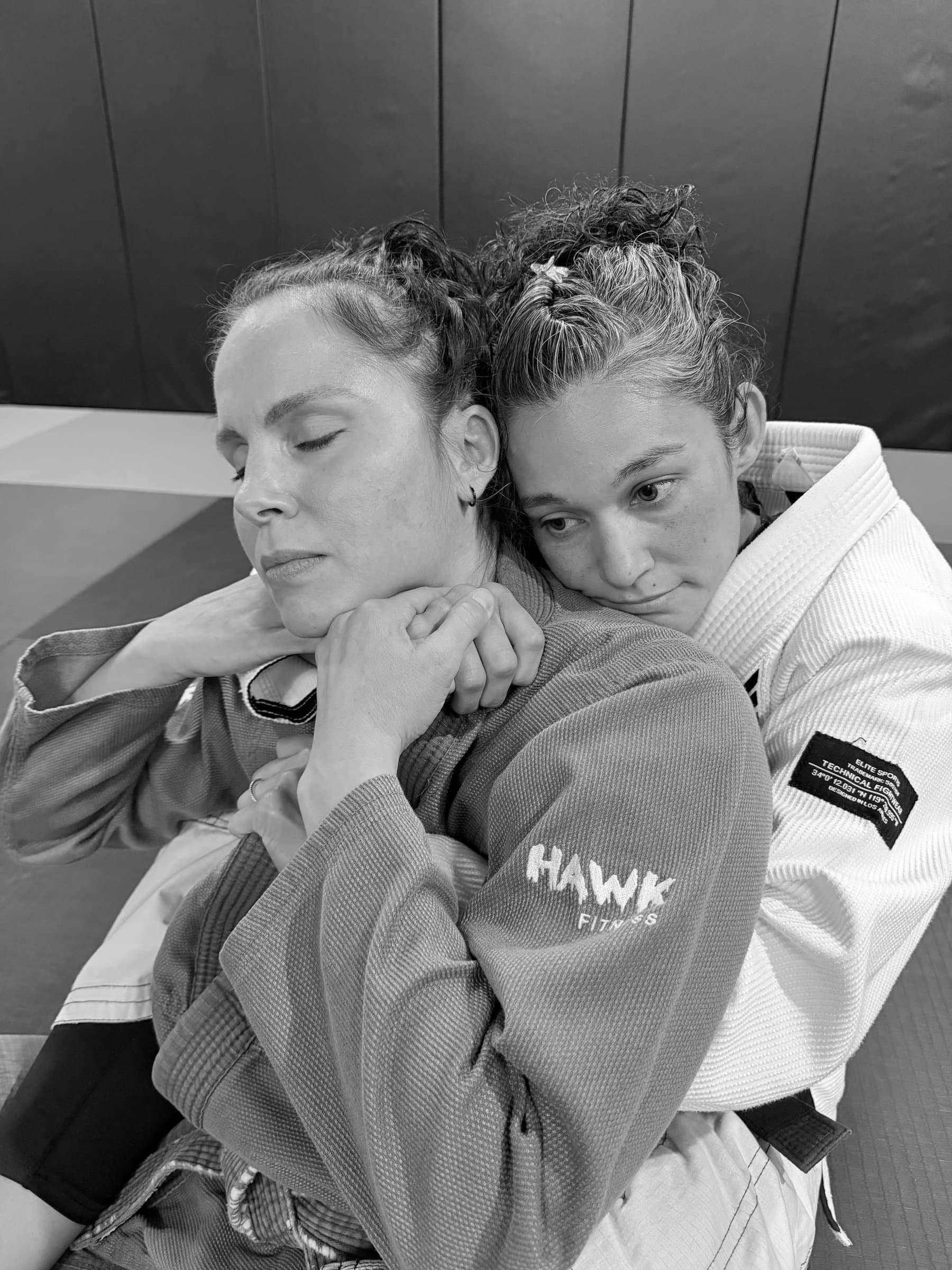
In training.
Photos supplied by Saved by Submission
Community events and awareness
Events that bring people together to learn, connect, support survivors, and raise awareness.
Events will bring community members together to learn, connect, support survivors, raise awareness about domestic violence and trafficking, and generate funds for survivor-serving organizations.
[GAP: the first event, with a date and a place that is safe to publish]
Partnership and resource support
Work alongside shelters, advocates, and resource centers rather than duplicate their services.
We want to work alongside shelters, advocates, resource centers, and other organizations rather than duplicate their services.
Funding and event proceeds can help strengthen the broader network serving survivors.
[GAP: named partners, and any shelter that has agreed to be public]
Partners
[GAP: named partners, and any shelter that has agreed to be public]